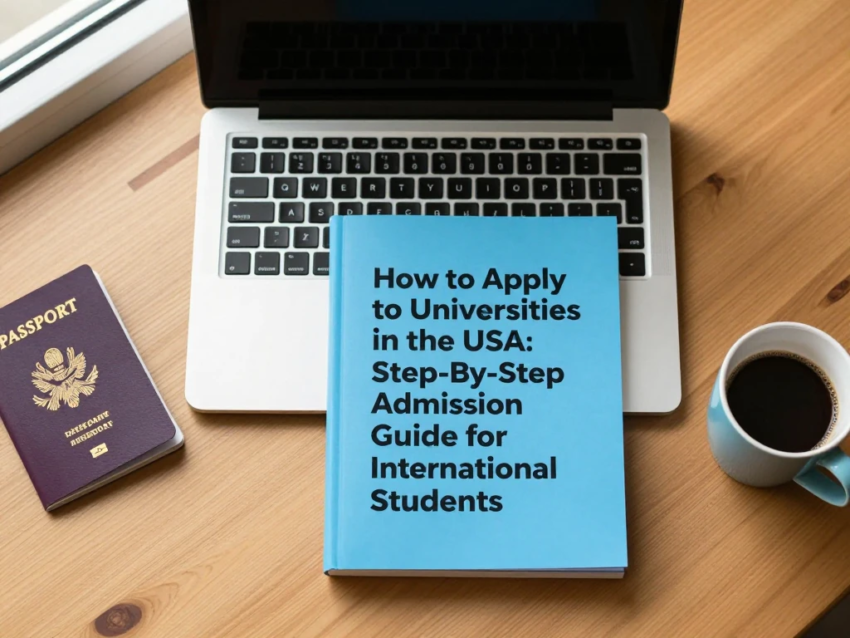
Studying in the United States is a goal for many international students because U.S. universities offer globally recognized degrees, research opportunities, and diverse academic programs. However, the application process can seem complicated because requirements vary by university, program, and education level.
This step-by-step guide explains how international students can apply to U.S. universities successfully.
Step 1: Research Universities and Choose Your Program
Start by identifying universities that match your:
- Academic interests
- Career goals
- Budget
- Preferred location
- Admission requirements
- Scholarship opportunities
Consider factors such as:
- University rankings
- Program reputation
- Tuition costs
- Campus facilities
- Student support services
- Employment opportunities after graduation
Common degree options:
- Undergraduate (Bachelor’s degree): Usually 4 years
- Graduate (Master’s degree): Usually 1–2 years
- Doctoral (Ph.D.): Usually 4–7 years
Step 2: Check Admission Requirements
Each university sets its own requirements, but international applicants commonly need:
Academic Documents
You may need:
- High school transcripts (for undergraduate applicants)
- Bachelor’s degree transcripts (for graduate applicants)
- Graduation certificates
- Academic records translated into English (if required)
English Language Requirements
Most U.S. universities require proof of English proficiency.
Common tests include:
- TOEFL
- IELTS
- Duolingo English Test
Some universities may waive English tests if you studied in an English-language institution.
Step 3: Prepare for Required Exams
Depending on your program, you may need standardized tests.
Undergraduate Students
Possible requirements:
- SAT
- ACT
- English proficiency test
Graduate Students
Possible requirements:
- GRE (for some programs)
- GMAT (business programs)
- English proficiency test
Always check the specific requirements of each university because many schools have changed their testing policies.
Step 4: Prepare Your Application Materials
A strong application usually includes:
Personal Statement or Essay
Your essay should explain:
- Why you chose the program
- Your academic goals
- Your achievements
- Why you want to study in the U.S.
Letters of Recommendation
Usually written by:
- Teachers
- Professors
- Employers
- Academic advisors
Resume or CV
Especially important for graduate applicants.
Include:
- Education
- Work experience
- Research
- Projects
- Skills
- Awards
Portfolio (If Required)
Some programs may request:
- Art/design work
- Architecture projects
- Writing samples
- Research papers
Step 5: Apply Through the Correct Platform
Depending on the university, you may apply through:
- University application portals
- Central application systems
Common platforms include:
- Common App for many undergraduate applications
- University-specific portals for many schools
Graduate applicants usually apply directly through each university’s website.
Step 6: Understand Application Deadlines
Deadlines vary, but common timelines are:
Fall Intake (Most Popular)
Classes begin:
- August–September
Applications often open:
- Around August of the previous year
Deadlines:
- December–January for many competitive schools
- Later deadlines may exist
Spring Intake
Classes begin:
- January
Applications often close:
- Several months earlier
Apply early to improve chances for:
- Scholarships
- Housing
- Visa processing time
Step 7: Apply for Scholarships and Financial Aid
Studying in the U.S. can be expensive, so explore funding options.
Possible sources:
- University scholarships
- Merit-based awards
- Need-based aid (where available)
- Research assistantships
- Teaching assistantships
- External scholarships
Prepare:
- Strong academic records
- Personal statements
- Achievement records
- Financial documents (if required)
Step 8: Receive Admission Decisions
Universities may send:
- Admission offer
- Rejection letter
- Waitlist decision
If accepted, you will receive an important document:
Form I-20
This document is issued by a U.S. university after admission and proof of financial ability. It is required to apply for an F-1 student visa.
Step 9: Apply for a U.S. Student Visa
Most international students apply for an:
F-1 Visa
The general process includes:
- Receive your Form I-20
- Pay the SEVIS fee
- Complete the DS-160 visa application
- Schedule a visa interview
- Attend the interview
You may need:
- Passport
- Admission letter
- Form I-20
- Financial documents
- Academic records
- Test scores
- Visa application documents
Step 10: Prepare for Arrival in the USA
Before traveling:
✅ Arrange housing
✅ Purchase health insurance if required
✅ Plan transportation
✅ Carry important documents
✅ Learn about your university orientation program
Bring:
- Passport
- Visa
- I-20
- Admission documents
- Financial records
Estimated Timeline for International Students
| Time Before Starting Classes | Action |
|---|---|
| 12–18 months | Research universities and programs |
| 10–12 months | Take required tests |
| 8–10 months | Prepare essays and documents |
| 6–9 months | Submit applications |
| 3–6 months | Receive decisions and apply for visa |
| 1–2 months | Prepare travel arrangements |
Common Mistakes to Avoid
❌ Applying after deadlines
❌ Sending incomplete documents
❌ Ignoring scholarship opportunities
❌ Writing generic application essays
❌ Choosing universities without checking costs
❌ Waiting too long to start the visa process
Tips for a Strong Application
Maintain Good Academic Performance
Grades are one of the most important factors in admission decisions.
Highlight Your Unique Background
Universities value students with different experiences, cultures, and perspectives.
Apply to Multiple Universities
A balanced application list may include:
- Reach schools
- Target schools
- Safety schools
Prepare Early
Starting early gives you more time for testing, essays, scholarships, and visa preparation.
Final Thoughts
Applying to U.S. universities as an international student requires planning, preparation, and attention to deadlines. The process involves choosing the right program, preparing documents, completing tests, applying for admission, securing funding, and obtaining a student visa.
With careful preparation and a strong application, international students can successfully begin their academic journey in the United States.